Skip to content
A broker is on duty 24/7
Fifteen Jets

What it costs

How much does it cost to charter a private jet?

In short

The short answer

Expect roughly $3,200–$4,800 per flight hour on a light jet, $6,000–$8,500 on a super-midsize, $8,000–$11,000 on a heavy jet and $11,500–$16,000 on an ultra-long-range aircraft, plus $1,500–$6,000 of ground handling at each airport. In practice that means about $11,500–$26,000 for London to Nice, and $67,500–$113,000 for Dubai to London non-stop on a heavy jet.

Nobody can honestly publish a fixed fare, because the largest cost driver is where the aircraft happens to be that week rather than how far you are flying.

Hourly rates by aircraft category

All-in wet rates: crew, fuel, maintenance reserve and operator margin. Ground handling is charged separately per airport, and our commission is already inside the price you are quoted.

Business jet
At Gloucestershire Airport
Business jet
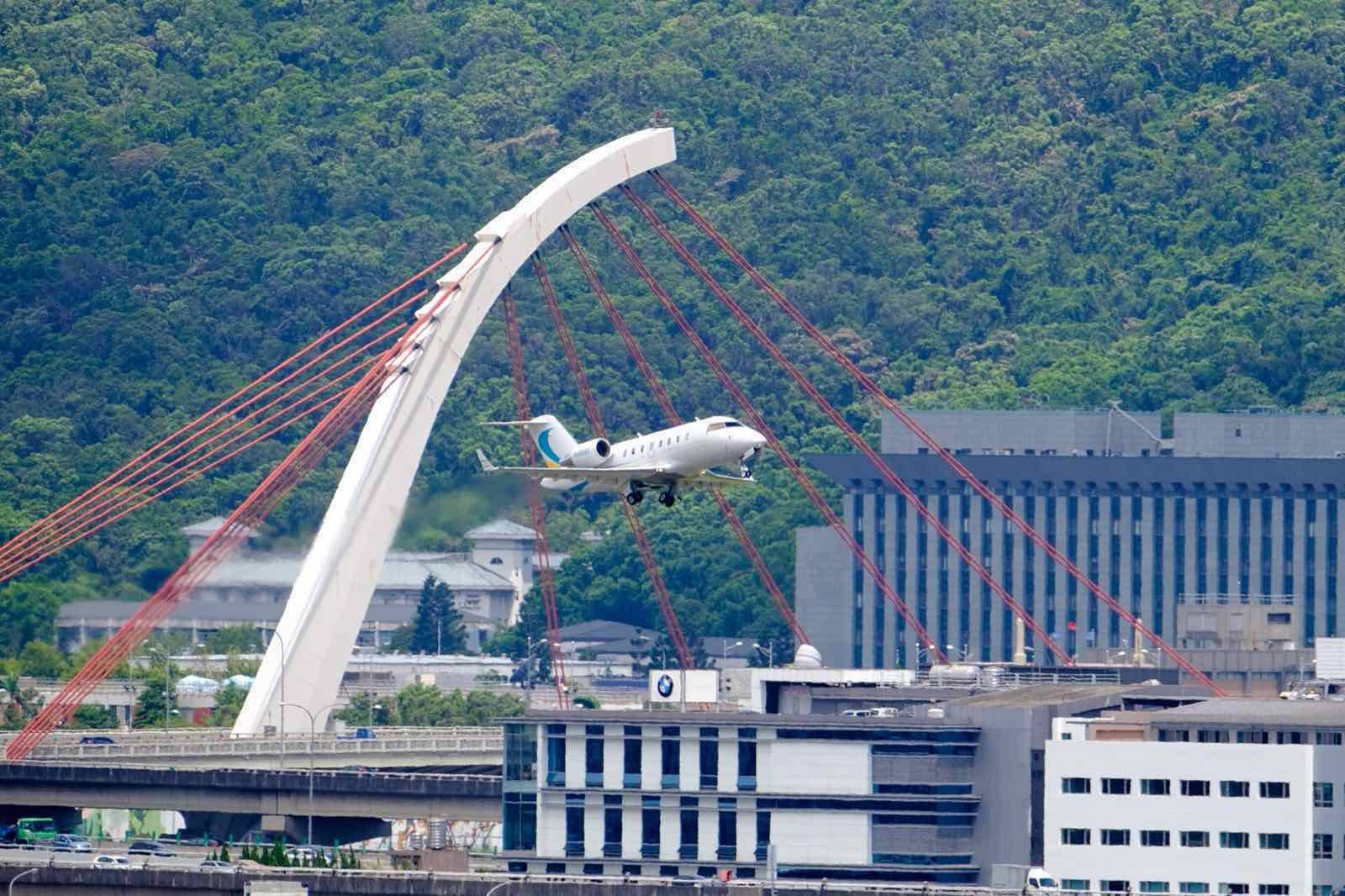
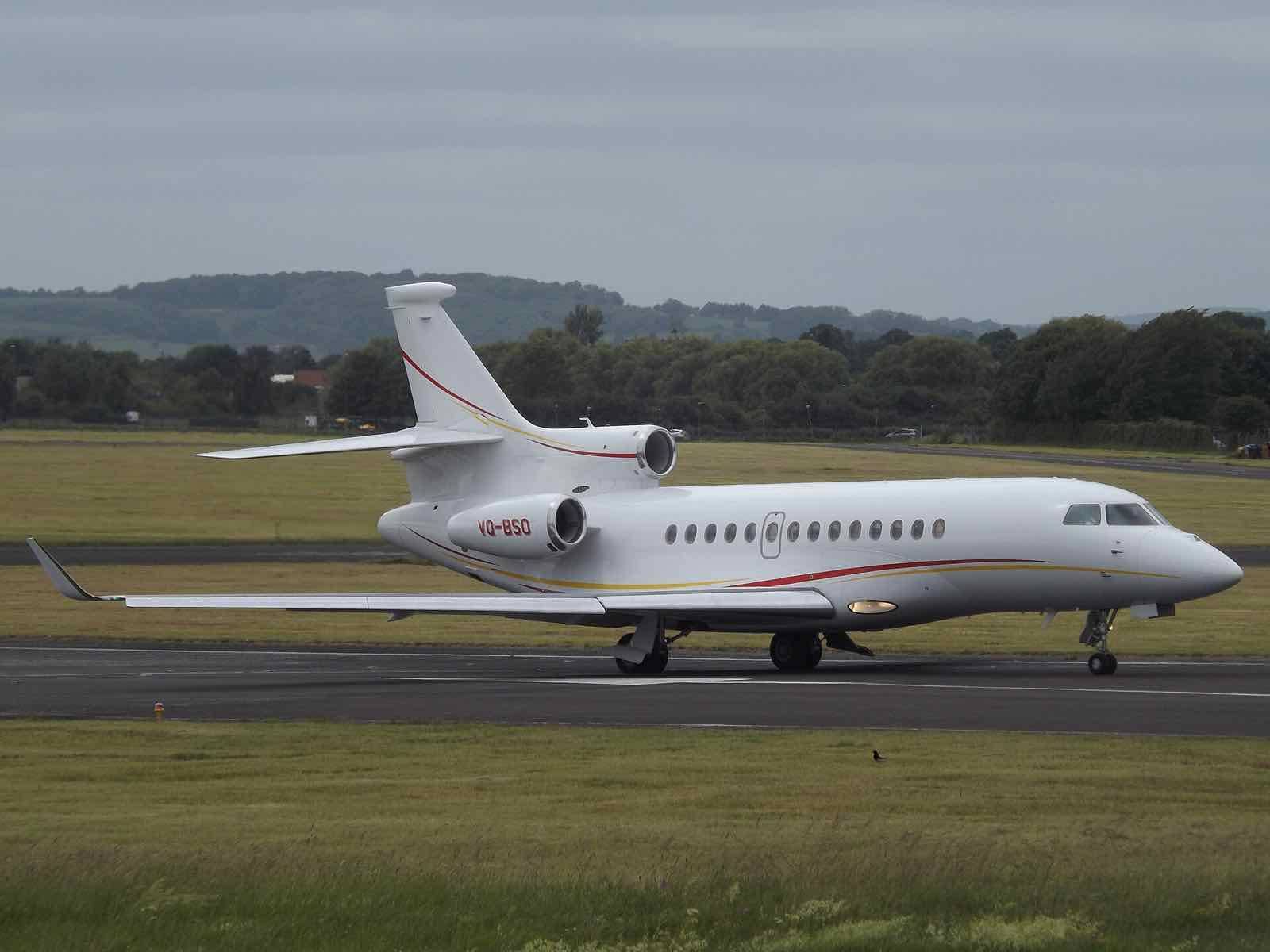
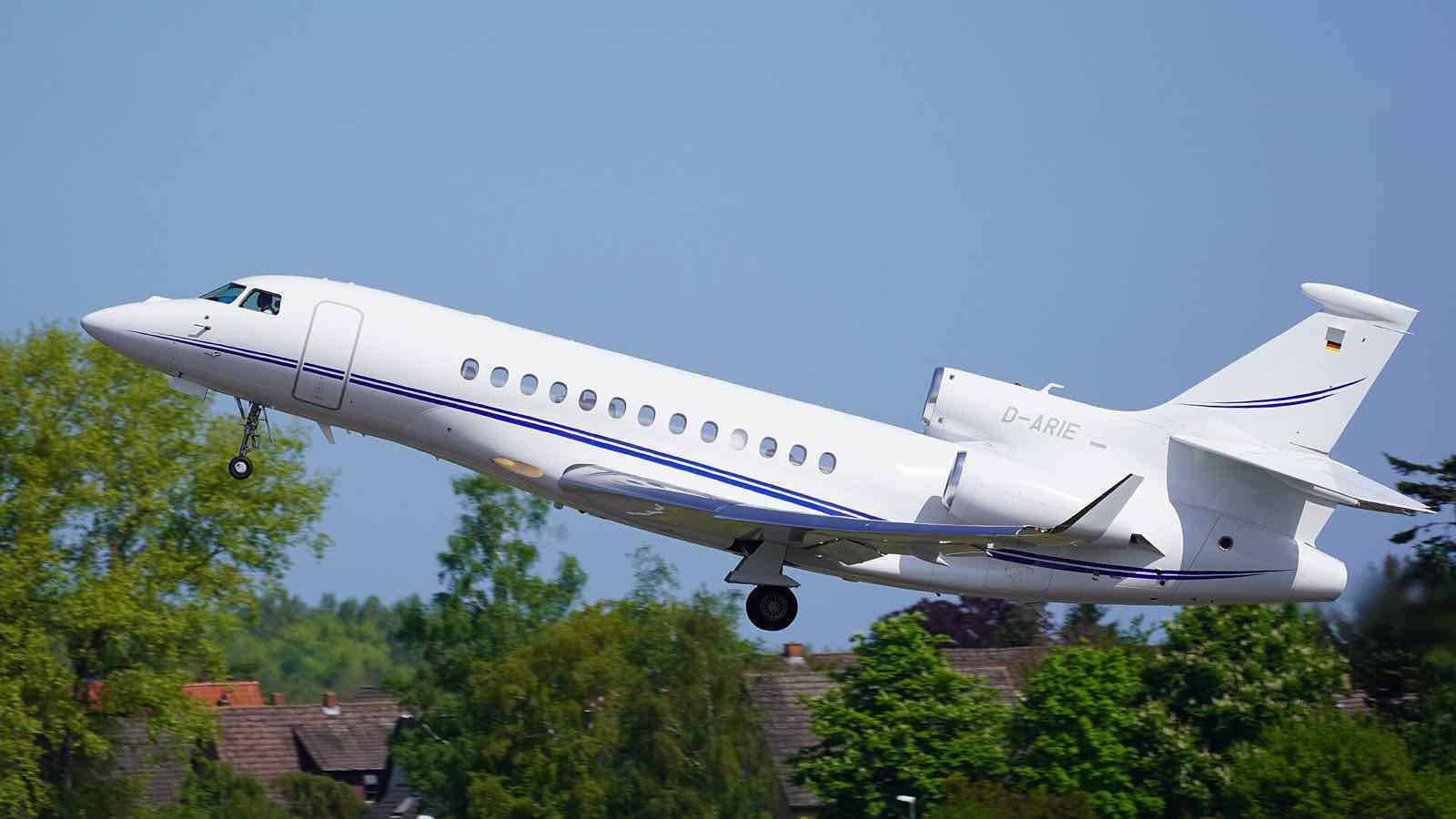
Aircraft and places of the kind described. Not operated by us.Credits
CategoryPassengersTypical rangePer flight hourTypical aircraft
Turboprops6–91,400 nmFrom $2,000king air 350i, pilatus pc 12
Very light jets4–61,150 nmFrom $2,600embraer phenom 100, cessna citation m2
Light jets6–81,800 nmFrom $3,200embraer phenom 300e, cessna citation cj3
Midsize jets7–92,400 nmFrom $4,500cessna citation xls, hawker 900xp
Super-midsize jets8–103,300 nmFrom $6,000bombardier challenger 350, embraer praetor 600
Heavy jets10–144,000 nmFrom $8,000bombardier challenger 650, gulfstream g450
Ultra-long-range jets12–166,600 nmFrom $11,500gulfstream g650er, bombardier global 7500
VIP airliners18–504,000 nmFrom $18,000airbus acj319, boeing bbj

Flying fourteen to sixteen people? That is the top of the business-jet range: a heavy jet seats up to fourteen and an ultra-long-range jet up to sixteen, and above that the answer is a VIP airliner or two aircraft. See 15-seat private jets and group charter for how the passenger count and the baggage list decide between them.

What the money buys

Cabin, to scale

Cross-sections drawn to one scale, with an average adult for reference. The step that matters most to passengers is not seat count but headroom: below roughly six feet of cabin height you spend the flight seated, and that single line separates a light jet from a heavy one more sharply than any spec sheet does.

  • Turboprops

    4.8 ft high · 4.5 ft wide

    Seated headroom

  • Very light jets

    4.8 ft high · 4.9 ft wide

    Seated headroom

  • Light jets

    4.9 ft high · 5.1 ft wide

    Seated headroom

  • Midsize jets

    5.7 ft high · 5.5 ft wide

    Seated headroom

  • Super-midsize jets

    6 ft high · 7.2 ft wide

    Stand upright

  • Heavy jets

    6.1 ft high · 8.2 ft wide

    Stand upright

  • Ultra-long-range jets

    6.2 ft high · 8.2 ft wide

    Stand upright

  • VIP airliners

    7.2 ft high · 12.1 ft wide

    Stand upright

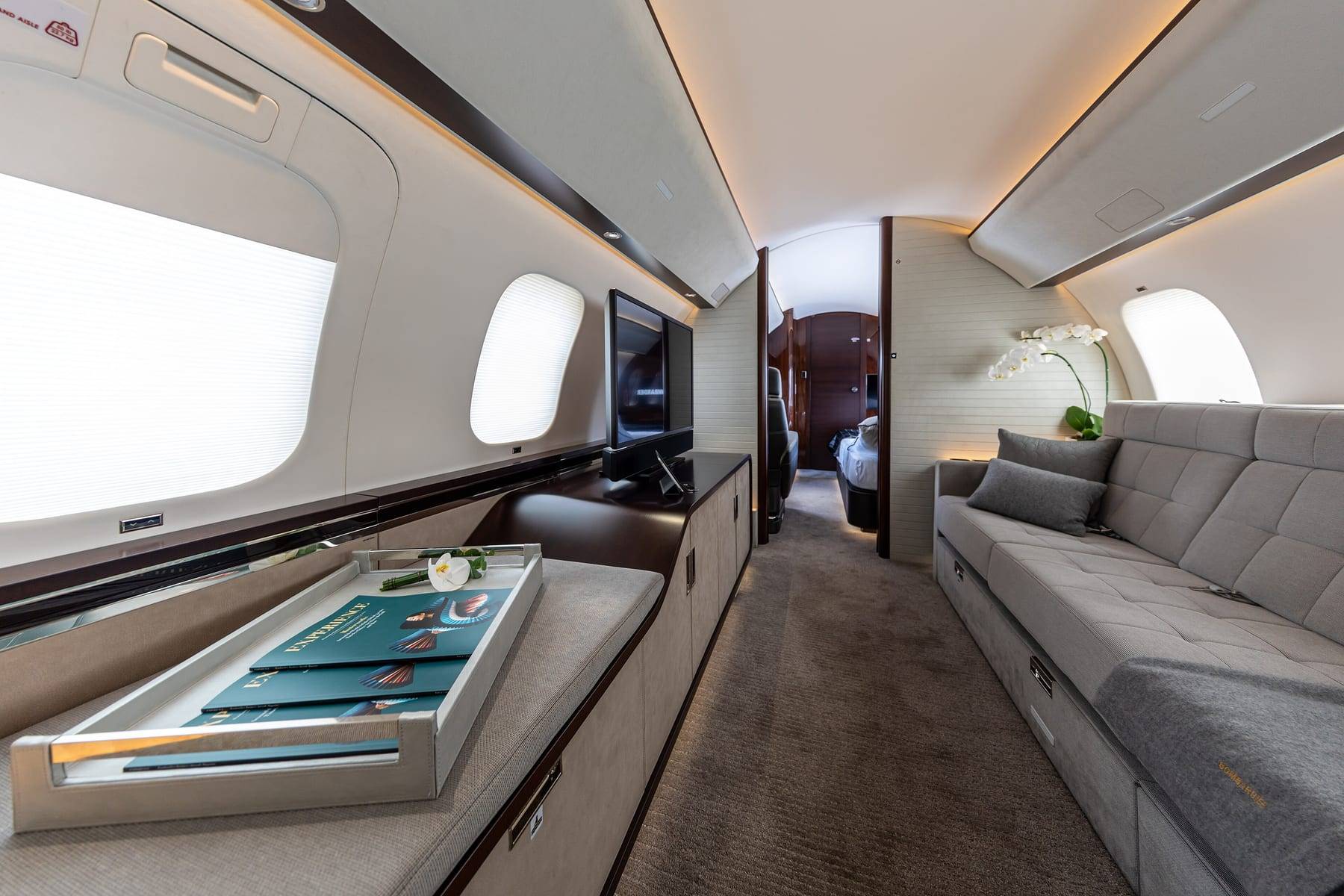
The main cabin of a Bombardier Global 7500, with a divan along one side and a bedroom beyond
Bombardier Global 7500 cabinCredit

What the top of the range looks like

At the ultra-long-range end the cabin stops being a row of seats and becomes rooms: a divan that converts to a bed, a separate aft cabin, a galley a crew member can actually work in. That is most of what separates a $12,000 flight hour from a $4,000 one — the aircraft is not merely faster, it is a different kind of space.

Whether it is worth it is a question about the leg. On a two-hour hop it is money spent on a room you will barely use; on a fourteen-hour sector it is the difference between arriving ready to work and arriving needing a day.

Worked examples on real routes

Each figure below is the smallest aircraft that can fly the leg non-stop, priced end to end. Larger cabins cost more; the full range for any route comes back with your quote.

RouteDistanceSmallest suitable aircraftFlight timeStarting price
Paris → Nice375 nmTurboprops1 h 55 minFrom $8,500
London → Nice580 nmTurboprops2 h 40 minFrom $10,000
London → Geneva423 nmTurboprops2 h 5 minFrom $9,000
London → Ibiza784 nmTurboprops3 h 30 minFrom $11,500
Dubai → Geneva2,662 nmSuper-midsize jets6 h 30 minFrom $47,500
Dubai → Maldives1,634 nmMidsize jets4 h 25 minFrom $26,500
Dubai → London2,978 nmHeavy jets7 h 5 minFrom $67,500
New York → Nice3,464 nmUltra-long-range jets7 h 50 minFrom $104,500

Indicative estimates, not quotes. They exclude VAT where it applies, de-icing, and peak-period surcharges, and they assume no unusual repositioning. Distances are great circle; published routings add a few percent.

DubaiLondon
2,978 nm · 5,515 km · 6 h 50 min at best

Worked example

Dubai to London

Just under 3,000 nautical miles, which puts it beyond every midsize aircraft and makes it a heavy-jet or ultra-long-range leg. Anything smaller would need a fuel stop, and no broker worth using would quote you one for this route.

Note the northerly track. The shortest path between these two airports climbs to around 52° north over the Balkans rather than running flat across the map — the reason a globe and an atlas disagree about which route is shorter.

What actually moves the price

Where the aircraft is, not where you are

The single largest variable. An aircraft already sitting at your departure airport costs far less than one that has to fly two hours empty to collect you, and then possibly fly empty again afterwards. The same trip on the same aircraft type can differ by 40% between two Tuesdays for this reason alone.

Block hours, not distance

Operators charge for brakes-off to brakes-on, including taxi and any fuel stop — not for the straight-line distance. Most also apply a daily or per-leg minimum, typically around two hours, so a 40-minute hop is not priced at 40 minutes.

Ground handling at both ends

Landing, parking, navigation and FBO fees are a fixed cost per airport, usually $1,500 to $6,000 each for a heavy jet. On short legs this is a meaningful share of the total, which is why a one-hour flight rarely costs a sixth of a six-hour one.

The calendar

Nice and Ibiza in July, Geneva during the ski season and Davos week, Riyadh whenever the permit queue is long. Demand spikes are geographic and predictable, and they move prices more than fuel does.

Cheaper, with conditions

Two honest ways to pay less

Empty legs. An aircraft repositioning for someone else’s trip sells its otherwise-empty flight at 25% to 75% below a normal charter. The trade is rigidity: the route and the window belong to that other trip, and the flight can vanish if their plans change.

Flexible timing. Moving a departure by a few hours, or by a day, often changes which aircraft is available nearby — and that is the variable with the largest effect on price. If your dates can move, say so with the request and we will price both.

What does not save money: booking further ahead. Unlike airline tickets, charter prices do not rise as the date approaches. Occasionally they fall, when an operator would rather fly a repositioning leg with someone in it.

Get a real number

A firm price from a named operator, usually within 15 minutes.

Trip type
Passengers
2

A phone number or an email is enough — whichever you prefer to be reached on.

Time, aircraft and special requirements — optional
Also on this trip

Your request is handled by a human broker. No account is required, and nothing is charged for options.

Questions

About cost

How much does it cost to charter a private jet?
There is no fixed price. As indicative starting points, light jets from about $3,200 per flight hour, super-midsize jets from about $6,000 per flight hour, heavy jets from about $8,000 per flight hour and ultra-long-range aircraft from about $11,500 per flight hour, plus positioning and ground handling at both ends. Each route page shows an indicative starting price for that trip. Those figures are starting prices, not quotes: the price of your flight is calculated individually and depends on aircraft availability, where the aircraft is positioned, the date, the operating company and airport charges.
What is an empty leg flight?
An empty leg is a repositioning flight an aircraft has to make anyway — flying empty to collect its next passengers, or home after a drop-off. Operators sell those seats at 25% to 75% below a normal charter. The trade-off is rigidity: the route, date and often the departure window are fixed by someone else’s trip, and the flight can be cancelled if the original charter changes.
How do you make money?
A commission on the charter, included in the price we quote. The number you see is the number you pay: no booking fee, no card surcharge, no crypto premium, no fuel surcharge added later. If a price changes because you change the trip, we show you the operator’s revised figure.
Do I pay before the aircraft is confirmed?
No. Nothing is charged until the aircraft is confirmed with the operator and you have it in writing: the operating company and its AOC, the aircraft type and year, the registration where available, the operator’s safety audit status where it holds one, and the cancellation terms. You approve the quotation, payment follows, and flight documents arrive within the hour. For crypto payments we wait for one network confirmation on domestic legs and three on international ones.

A broker is on duty · 24/7

Tell us where you’re going.

We’ll check the aircraft. You choose the flight.

Route, date and passengers are enough to start. Aircraft options typically come back within 15 minutes, subject to availability — with the operating company named and indicative pricing, and no obligation to book.

Get aircraft options